How a Stray Husky Turned Kate Bonny Into a Groomer — and a Rescue Founder
Kate Bonny loaned out a leash to catch a stray husky and came home with a dog. That husky taught her to groom, and led to a nonprofit for shelter animals.
Some grooming careers start with a certification course.
This one started with a loaned leash.
Years ago, Kate Bonny got a call from a local school in Bibb County, Alabama. A stray husky had wandered onto the grounds and staff needed something to hold her with. Did Kate have a spare leash and collar?
She did. She handed them over and thought nothing more about it.
Ten days later, Animal Control called. The husky had been surrendered — nobody had come for her. Kate's leash and collar were still on her.
Kate drove over to collect her belongings.
She left having agreed to take the dog.
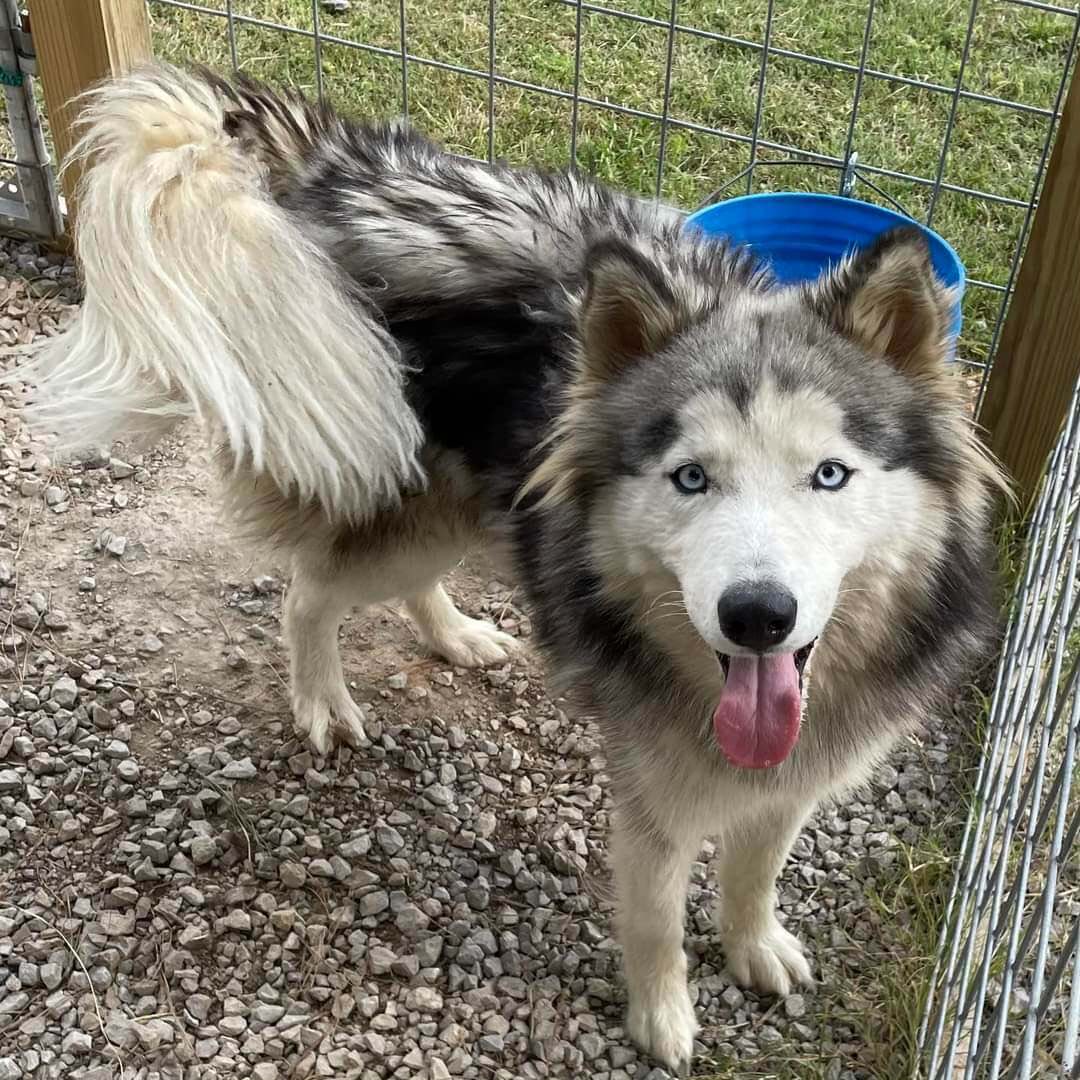
The dog nobody came back for
The husky — Taimyrn, Tay for short — was about nine months old. Her owner's trailer had burned down, the family had moved somewhere that wouldn't take a dog, and she'd been let loose to sort herself out. After weeks on her own she found her way into a school building, and from there into Animal Control.
By the time Kate met her she was heavily matted, under-socialized, and entirely unprepared for life as somebody's pet. What she needed was not a better dog. She needed one person willing to take her on.
Tay had a spay appointment booked. Kate came back eight days later and brought her home.
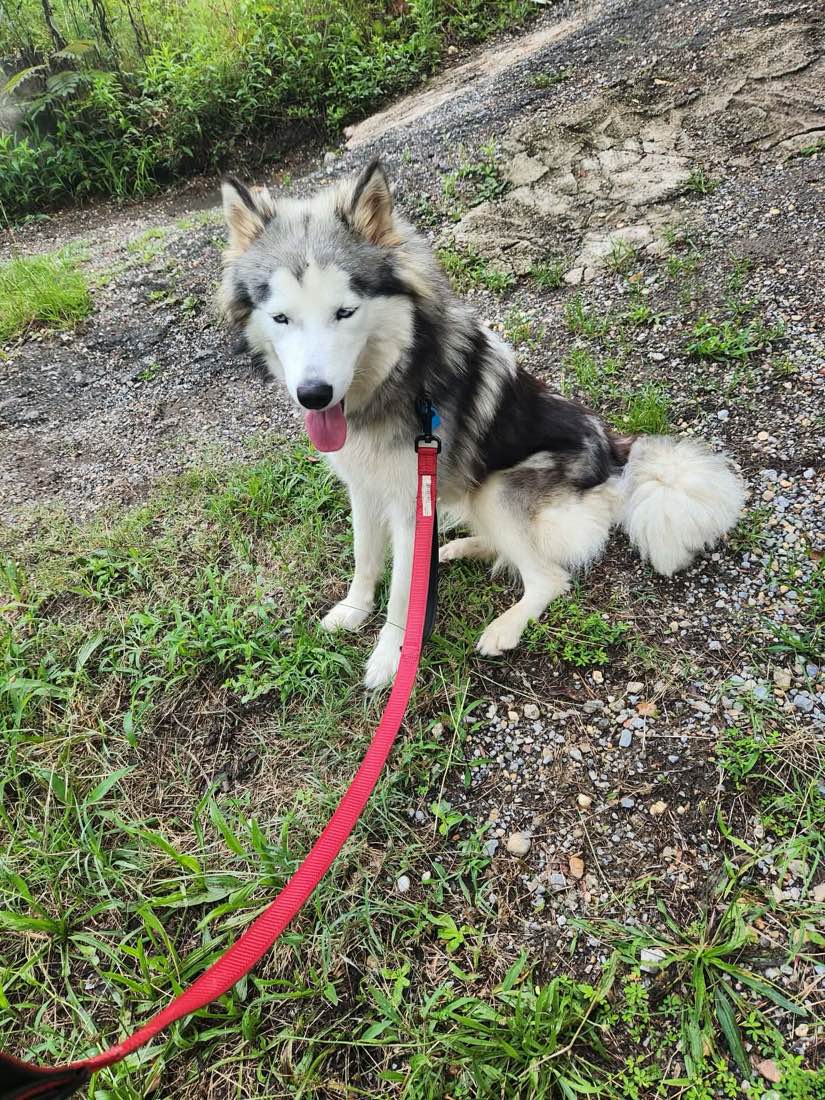
The nearest groomer was sixty miles away
Vet bills, vaccinations and a spay had already cost Kate several hundred dollars. Then came the coat.
The only groomer willing to take on a severely matted husky wanted more than Kate could afford — and was over sixty miles away.
So she did what a lot of stubborn dog owners do. She watched every husky grooming video she could find, bought a cheap set of clippers, and started working through the mats herself.
The first groom took more than three hours.
It was not a good groom. Kate is the first to say so. But it was the one that changed the direction of her life — and it gave Tay her tail back. She got the mats out and trimmed the tail down to a weight the dog could actually carry.
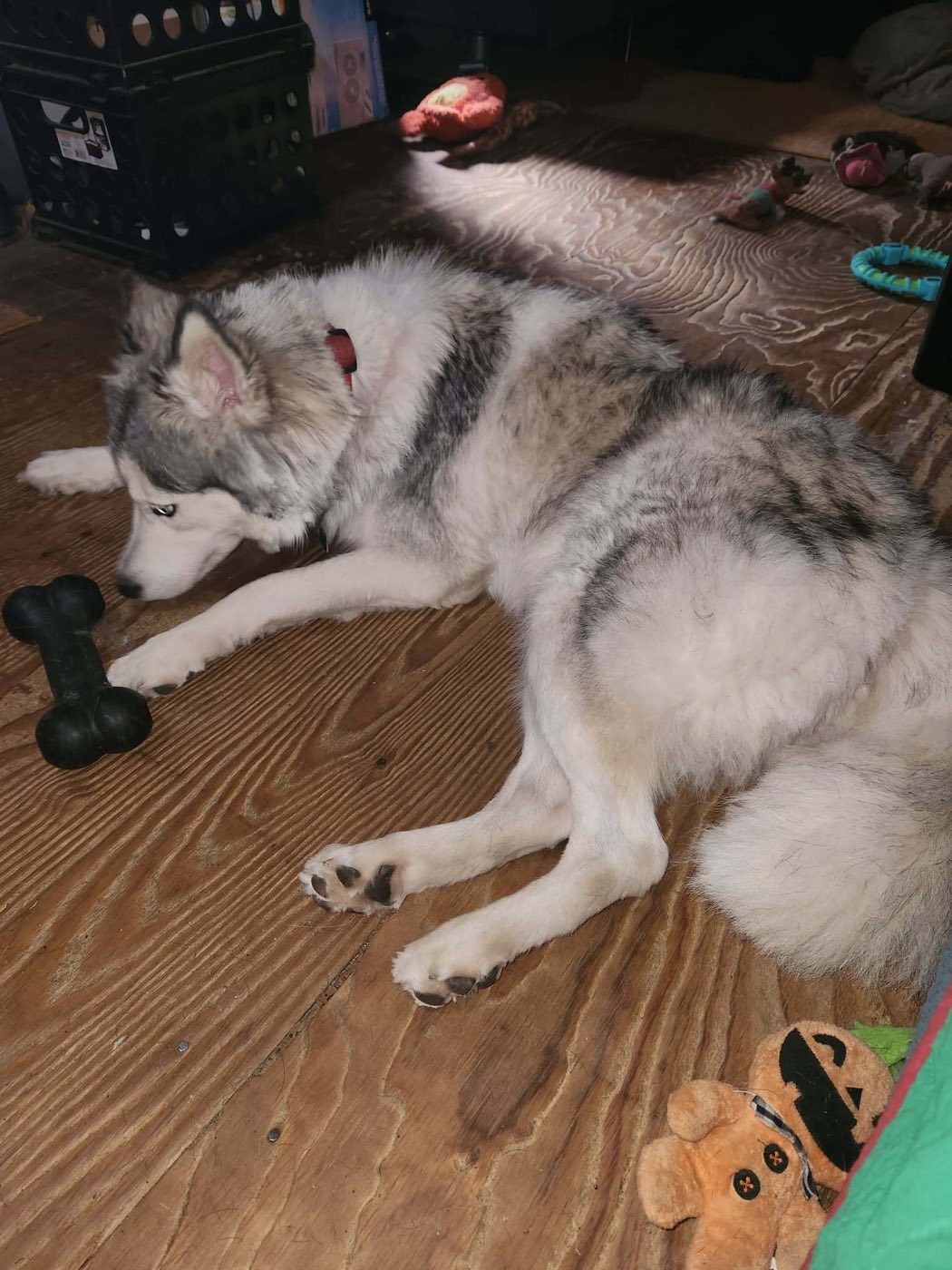
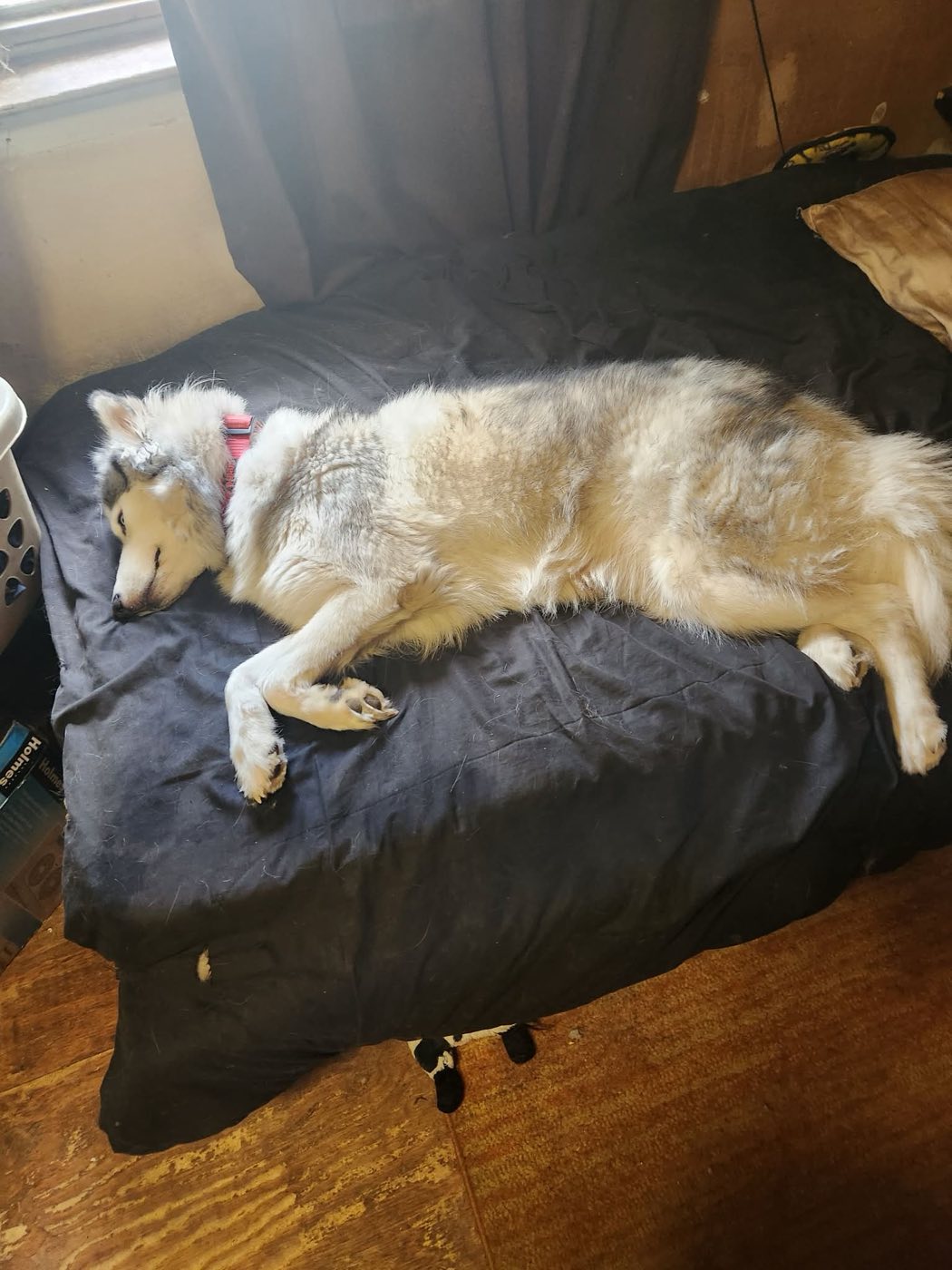
From one dog to a shelter's worth
Word got around, the way it does in rescue circles. Volunteers and shelter staff started calling Kate with the cases nobody else wanted: a severely matted doodle, a Great Pyrenees–Komondor mix, shelter dogs who needed to look adoptable before anyone would look at them twice.
For more than a year she groomed shelter animals for nothing, because they needed it.
Then the adopters started calling. They'd taken a dog home and wanted the same person to keep grooming it. That was the point where a favor started looking like a profession.
Kate completed a grooming certification course, bought proper equipment, and began grooming professionally out of her basement.
How do you groom senior, giant, and special-needs dogs safely?
You adapt the groom to the dog rather than the dog to the schedule — which in practice means longer appointments, buffer time between clients, and equipment choices made around the animal's medical condition rather than around speed. Kate books two to three hours per dog and only takes three or four dogs a day, with thirty-minute gaps between them for disinfection and so that no two clients ever cross paths.
That is not caution for its own sake. Look at a single day on her calendar:
I have King Henry scheduled tomorrow morning. He is a 120 lb, 9 yo Great Pyrenees–Komondor mix with hip dysplasia. He cannot stand for long periods of time. He lays on my floor, and I groom the side that is facing up. He does not like other dogs. I know he will take 2.5 hours.
Kate Bonny
The appointment after King Henry is an Australian Shepherd with a heart condition:
I cannot use the high velocity dryer. It causes her a lot of stress, and that could kill her. I have 3 regular house fans that blow at her from all directions and use a quick dry spray while brushing her. She will also take 2.5 hours due to extended drying time.
Kate Bonny
Last in is a Bernese Mountain Dog who has to stay muzzled throughout. Three dogs, one room, and three sets of requirements that cannot safely overlap. The gaps between them are not padding — they are the reason the day works.
The disinfection routine fills those gaps:
I use Barbicide on all my blades and tools and spray the floor and all surfaces with Parvo Scrub II after every groom. That stuff kills rabies in 8 min, distemper in 12, parvo in 15. All the nasties are dead if I let it soak for 20 min before rinsing.
Kate Bonny
There's a working lesson buried in there for any groomer thinking about specializing. A schedule built for volume cannot hold clients like these; the buffer time is the service. If you're moving in this direction, your calendar and appointment durations need to be set up around the slowest dog in the day, not the average one — and your prices need to reflect what that appointment actually costs you in chair time. We wrote about why handling the dogs other people won't is one of the few genuinely defensible premium positions in grooming. Kate arrived at it from the opposite direction: she took the dogs because they needed taking.
Her client list now runs to senior dogs, giant breeds, dogs with mobility problems, nervous and reactive dogs, and special-needs pets. One at a time, start to finish, no kennel in between.
The husky, ten years on
The dog that started it is still with her, a decade on from the first amateur groom that took three hours to get the coat off. Tay has been Kate's practice dog, her proof of concept and her regular client ever since — the coat comes down every autumn when it blows, and comes down further when Alabama gets unreasonable.
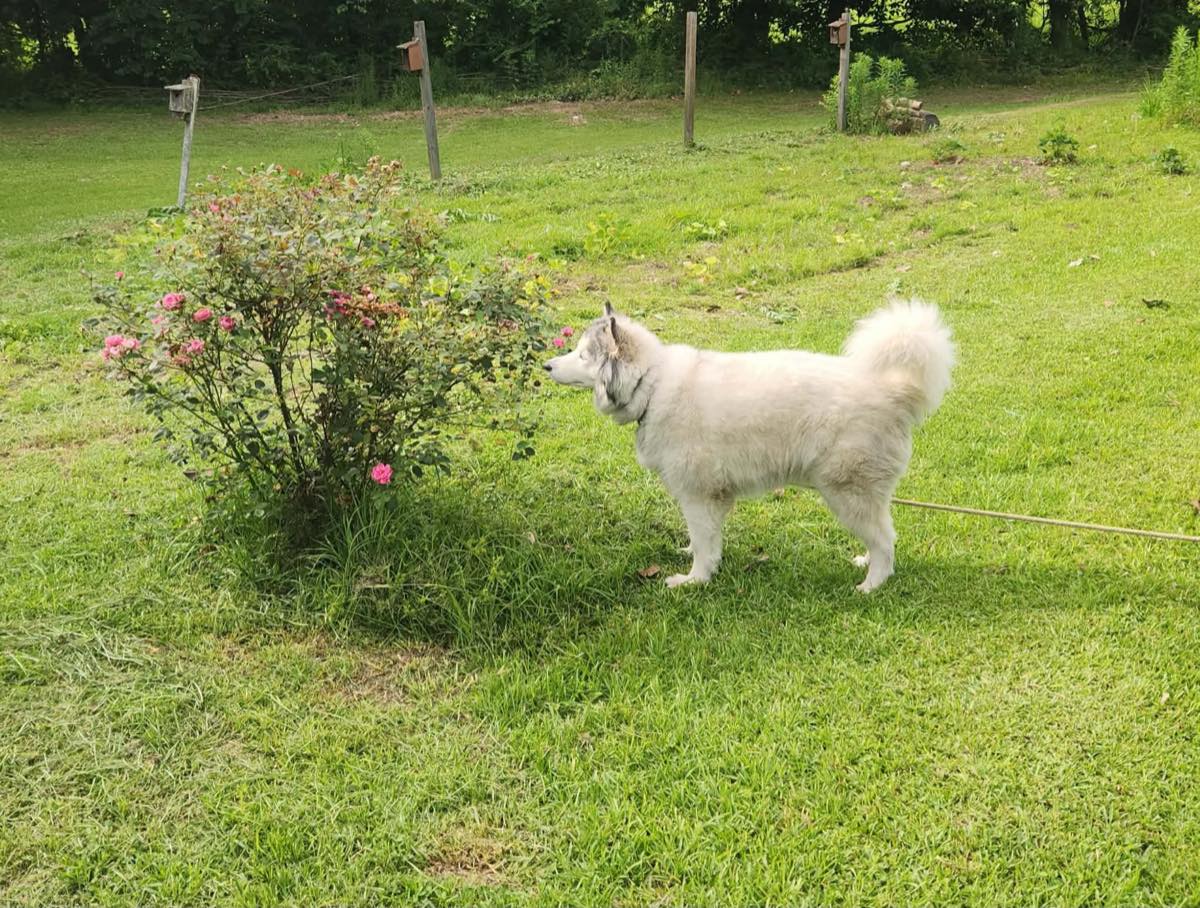
Why a husky ended up in a lion cut
This summer Tay went into a lion cut. Two reasons, neither of them cosmetic.
The first was the weather. Arctic dogs are not built for 95°F and high humidity, and a husky in an Alabama August will tell you so. Before the cut, Tay wouldn't go outside except at dawn and dusk. She spent most of the day asleep on top of an air vent.
The second was fleas. A foster dog had brought them into the house, and there is no realistic way to wash flea eggs out of a full husky coat. To treat the dog properly, Kate had to be able to reach the skin.
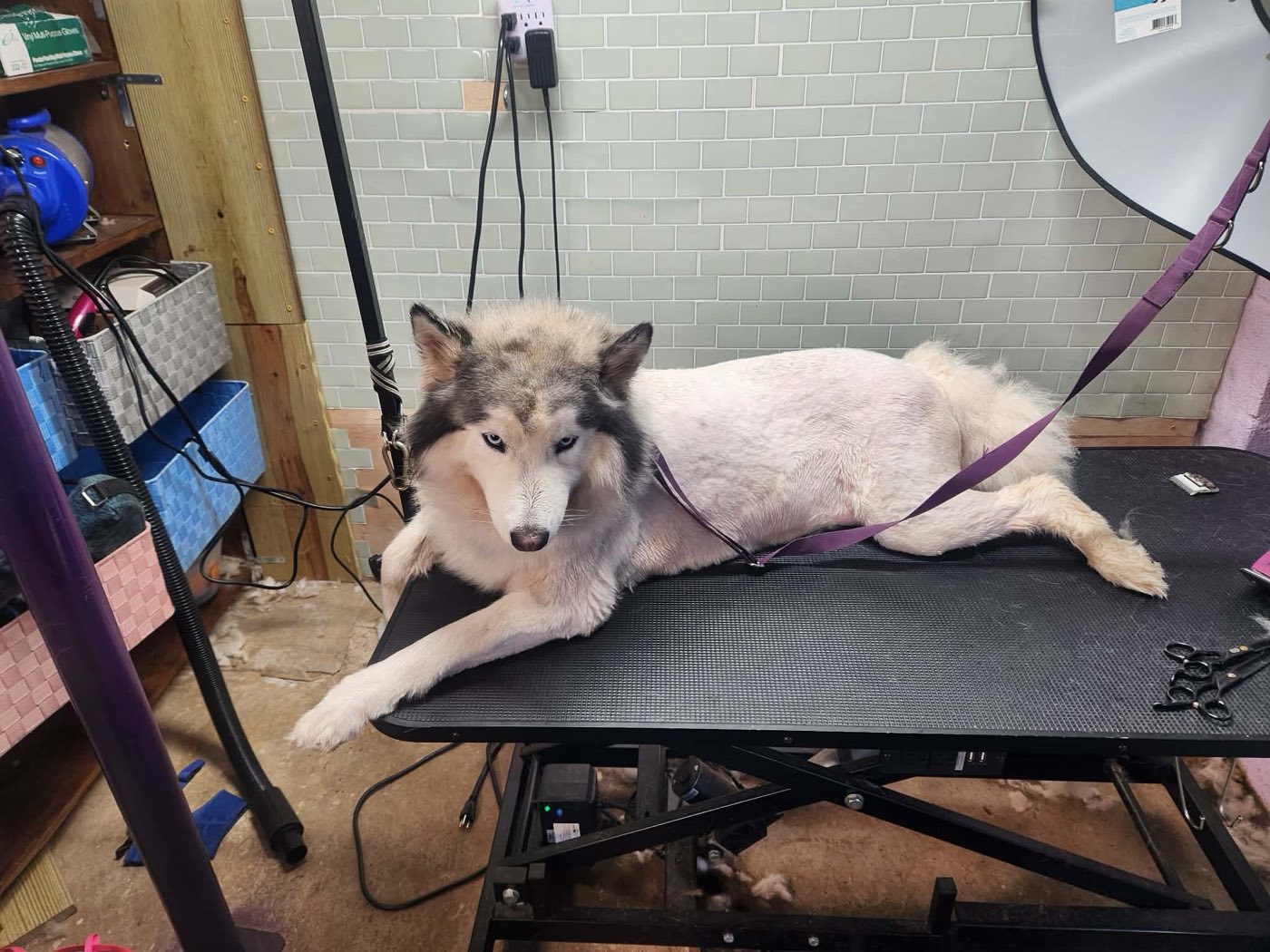
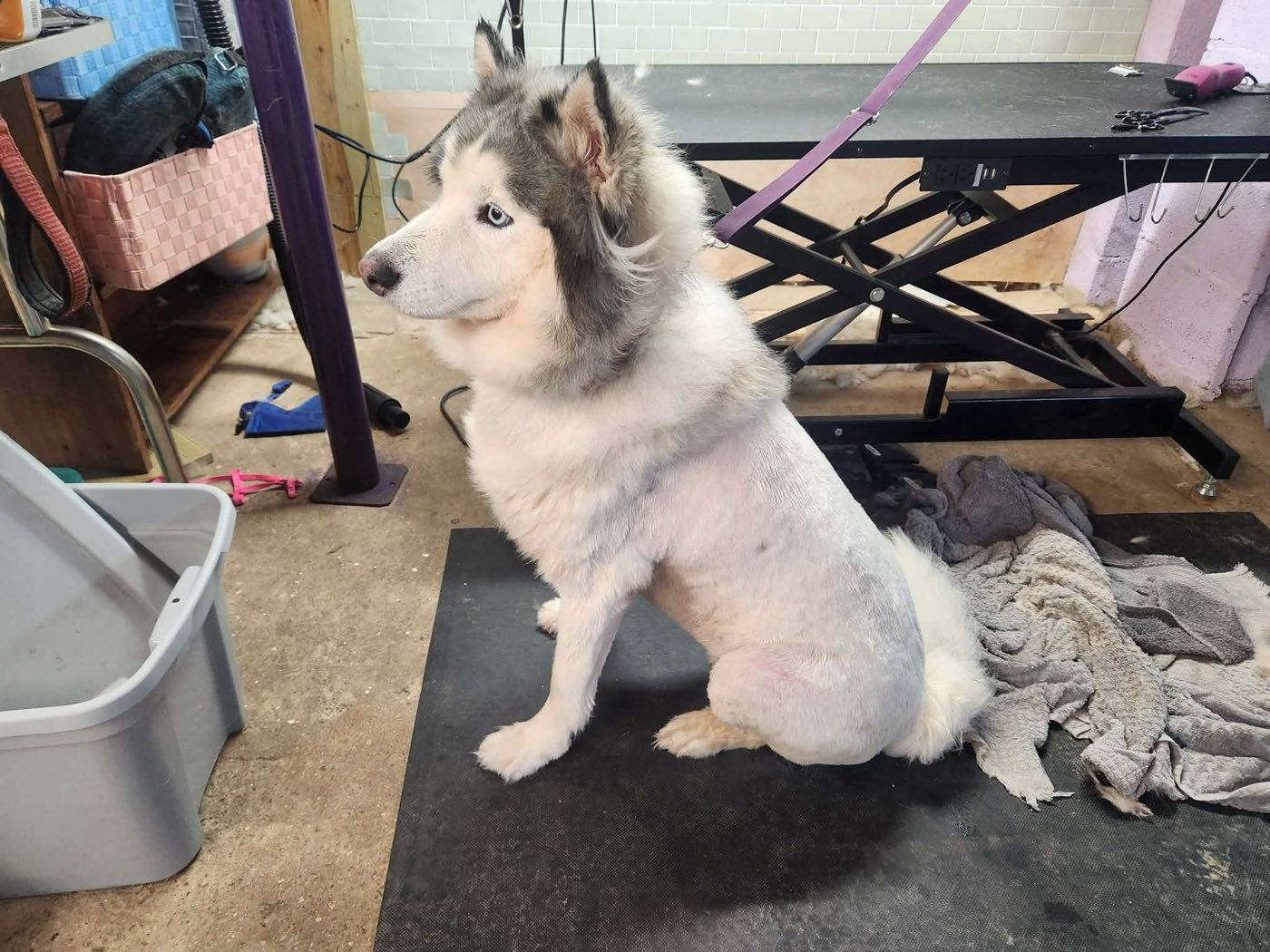
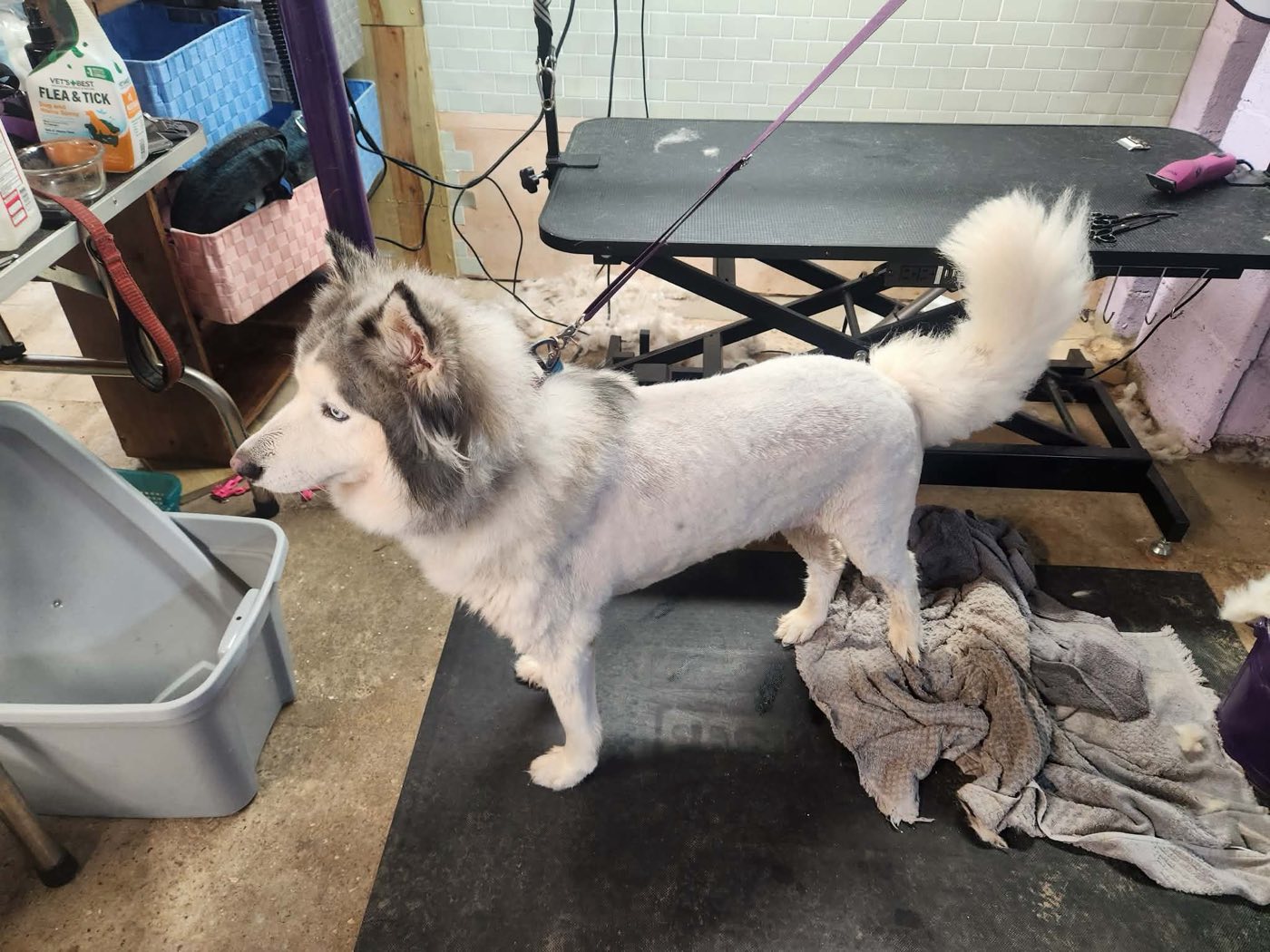
The change afterwards was the point of the exercise:
Before the cut, she didn't want to go outside except at dawn and dusk, and she spent most of the day sleeping on top of the air vent. After, she will go out during the heat of the day long enough to potty, is back to doing husky spins and playing with the other dogs inside, and will join me on the couch for snuggles rather than panting on top of the air vent.
Kate Bonny
How the cut was actually done
A lion cut on a double coat is a blending job, not a shave. Kate scissored the head ruff and the tail, then transitioned from the ruff down into the body with a #3¾, a #5 and a #7, blending between each.
That last detail is worth a footnote, because it touches a live argument in the trade. Conventional grooming advice says don't shave a double-coated dog; the undercoat insulates against heat as well as cold, and the coat may grow back patchy. Kate read research challenging how absolute that rule is, and made a call for her own dog in her own climate: Alabama in August, 101°F with a heat index of 115°F, a dog who stays indoors through the hottest part of the day and has a kiddie pool for the rest of it — plus a flea infestation that had to be washed off skin she couldn't otherwise reach.
Reasonable groomers disagree on this one, and it's a conversation worth having with the owner in front of you rather than a rule to apply blindly.
When grooming turned into advocacy
Kate's reach eventually went past the grooming table.
For more than a decade, local volunteer Blanche Wallace had been pulling animals out of the Bibb County Animal Control facility more or less single-handed. Kate is careful about the credit here: Blanche had been doing this on her own for years before Kate turned up. Kate only came into the picture about three and a half years ago.
Then a series of events raised public concern about welfare practices at the facility, and the county changed how animals could leave it: releases now had to go through a registered charitable organization.
That rule could have ended the rescue work entirely. Instead, Kate joined Blanche Wallace and Jaysa Stewart to start one.
Bibb County Animal Support (BCAS) was approved by the IRS as a 501(c)(3) nonprofit in May 2026. It is run entirely by volunteers — a handful of them — and it does the unglamorous work:
- Pulling animals out of the shelter system
- Funding vaccinations and veterinary care
- Supporting spay and neuter programs
- Coordinating rescue placements
- Improving conditions inside the facility
- Providing direct assistance to Animal Control
The fostering, which never really stops
Pulling a dog out of the shelter only works if there is somewhere for it to go, which in a county this size usually means a volunteer's own house. Kate fosters.
One of them didn't leave. Trigger came in as a foster and stayed — a foster fail, in the trade's affectionate term for it. Two more, Buck and Rip, are with her now.
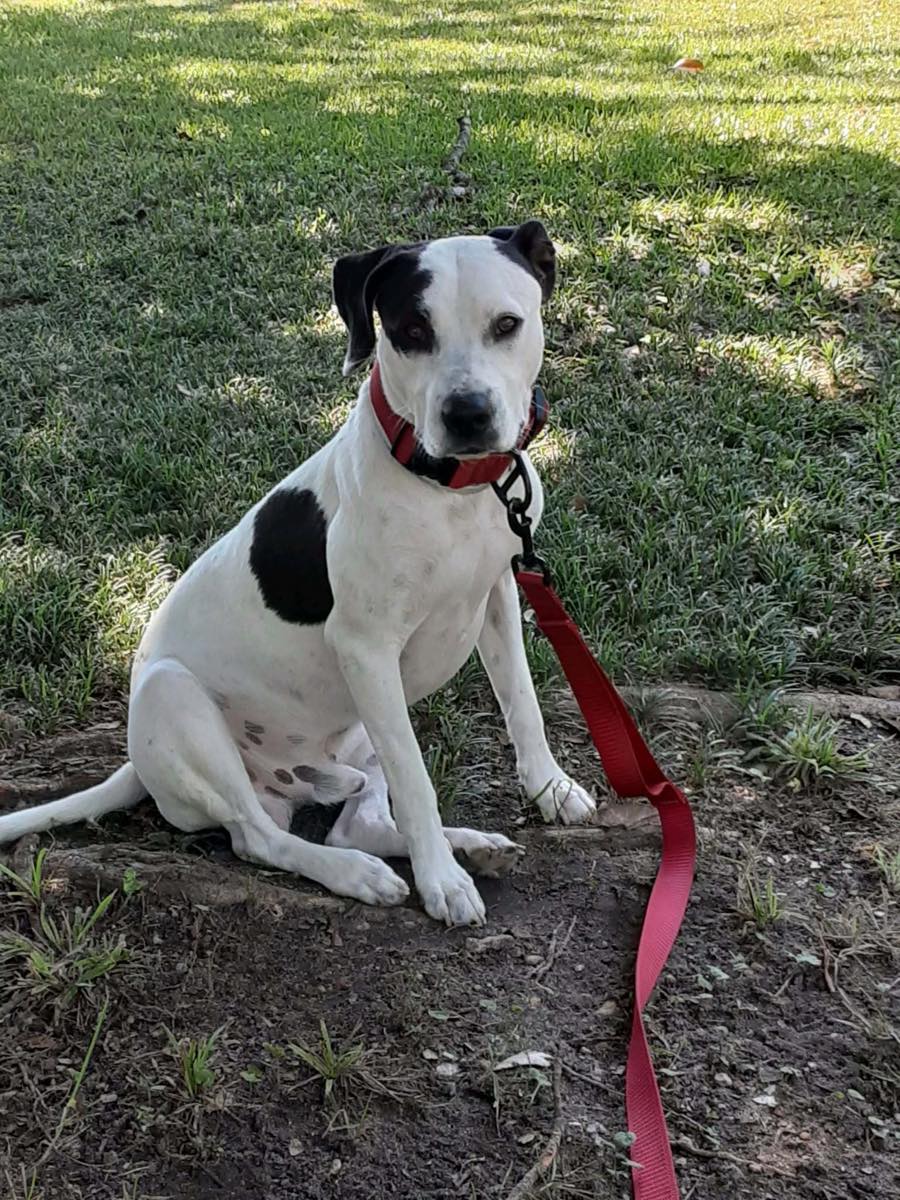
This is also the unromantic half of the story. The foster dog that brought fleas into the house is the reason Taimyrn ended up in a lion cut. Fostering is not a clean, contained act of charity you perform in a spare room; it lands in the middle of your own animals, your own laundry, and in Kate's case your own grooming table.
Grooming is closer to welfare work than the job description suggests
From the outside, grooming reads as haircuts and baths and blow-dryers.
From the inside, it sits right on top of animal welfare. Groomers are often the first to find the lump, the ear infection, the pain response the owner had put down to grumpiness. They're the reason a matted shelter dog starts getting looked at by adopters. And in a lot of small communities, they're one of the few people with the skills, the equipment and the willingness to do something about an animal nobody else will touch.
One stray husky and a loaned leash put Kate Bonny into that role. She's been in it ever since.
How to support Bibb County Animal Support
BCAS is a volunteer-run nonprofit serving animals throughout Bibb County, Alabama, and the needs change from one week to the next — an urgent pull from the shelter, a vet bill, a dog that needs a foster placement by Friday.
The organization's email address is BibbCoAS@gmail.com. That is the address for questions, for offers of help, and for donations, which can be sent through it directly.
For current cases and adoption appeals, the fastest place to look is Kate's Facebook page, where whatever BCAS needs this week gets posted.
If you're a groomer reading this, there is a version of Kate's contribution available to you that costs nothing but time: your local shelter almost certainly has a dog whose coat is the only thing standing between it and an adoption.
Frequently asked questions
What does it take to groom senior and special-needs dogs?
Time and adaptation, more than any special equipment. That means longer appointment slots (two to three hours is normal, not slow), grooming a dog lying down if it can't stand, air drying instead of a high-velocity dryer for dogs with heart conditions or noise anxiety, and scheduling buffers so reactive dogs never encounter each other. Owners of these dogs are typically the most loyal and least price-sensitive clients in the trade, because so few groomers will take them.
Do you need a certification to become a dog groomer?
Requirements vary by country and state, and many places have no licensing requirement at all. Kate Bonny started with online videos and a cheap set of clippers on her own dog, and took a formal certification course later, once she'd decided to do it professionally. Certification is genuinely useful for skills, insurance and client confidence — but the path in is usually practice on real coats first.
Can you give a husky a lion cut?
You can, and groomers disagree about when you should. The standard advice is not to clip a double coat, because the undercoat insulates against heat as well as cold and may grow back unevenly. The counter-argument is that the rule is applied too absolutely — a heavily coated arctic dog in 95°F Alabama humidity, or one that needs flea treatment washed down to the skin, is a different case from a husky in a temperate climate. Kate scissored Taimyrn's head ruff and tail and blended the body down with a #3¾, #5 and #7. The dog went from sleeping on an air vent all day to going outside in daylight again.
How can groomers help their local shelter?
Ask. Most shelters have no groomer on call and a permanent backlog of matted intakes, and a clean, comfortable dog is significantly more likely to be adopted. Many groomers start with a few hours a month and find, as Kate did, that adopters follow the dog to their table afterwards.
What is Bibb County Animal Support?
BCAS is a volunteer-run 501(c)(3) nonprofit in Bibb County, Alabama, founded by Blanche Wallace, Jaysa Stewart and Kate Bonny, and approved by the IRS in May 2026. It rescues animals from the county shelter system, funds vaccinations and veterinary care, supports spay and neuter programs, and assists the Animal Control facility directly. It can be reached at BibbCoAS@gmail.com, which is also how donations are accepted.
Special thanks to Kate Bonny for sharing her story, and to the BCAS volunteers for the work they do for animals in their community. Quotes are taken from Kate's own posts, lightly corrected for typos and published with her permission.